

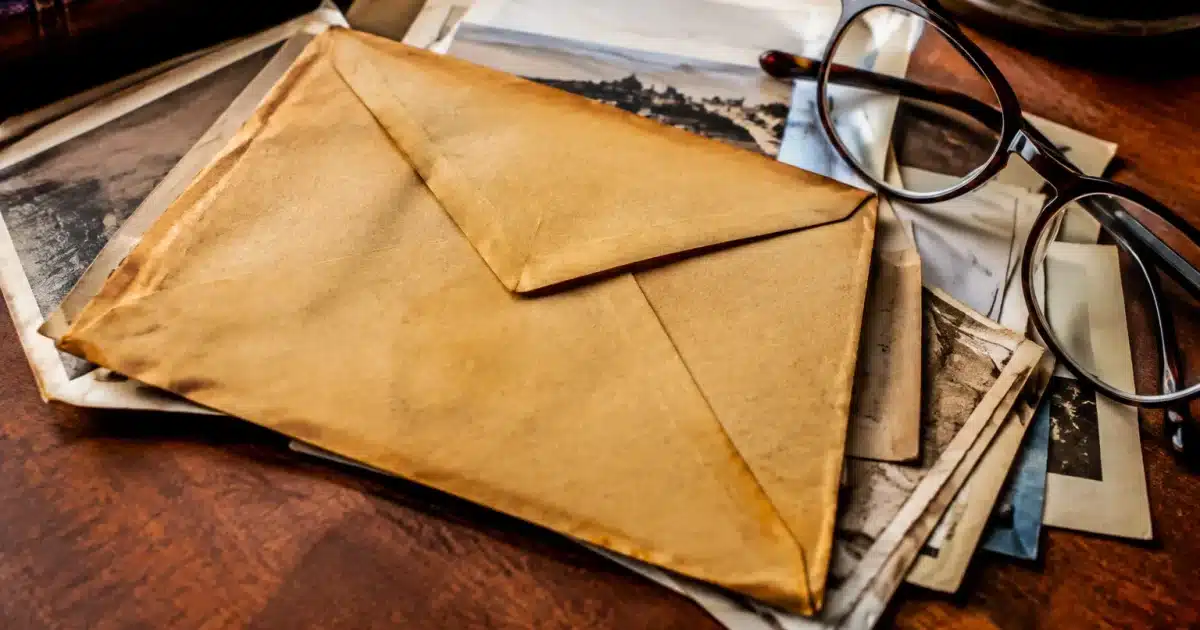
A yellowed envelope slipped between two books, a folder forgotten at the back of a drawer. When clearing a house after a death, these finds can seem trivial. Often they are not: some family documents can radically alter how an inheritance is divided, sometimes years after being discovered.
The rule is straightforward to state, harder to apply when grieving and urgently clearing a property: no old document should be thrown away or destroyed before being shown to the solicitor handling the estate. A handwritten will hidden in a book, an informal debt acknowledgement scrawled on paper, an old life insurance policy forgotten in a drawer can all change how assets are distributed among beneficiaries.
Why an old envelope can transform an inheritance settlement
An estate is typically built on official documents: legal deeds, property titles, recent bank statements. But the law also recognises the validity of private documents, provided they meet certain requirements. A will written by hand, dated and signed, has the same legal force as a formal will drawn up by a solicitor, even if it has been sitting in a shoebox for twenty years.
This potential significance makes sorting papers extremely sensitive. A beneficiary hurrying to clear a house might, without intention or sometimes deliberately, cause a document to disappear that would have altered how assets are shared. This is known as a risk of concealing estate documents: hiding or destroying something that should have been disclosed to other beneficiaries.
Documents that change everything: wills, debts, life insurance
The hidden handwritten will
This is the most dramatic scenario. A handwritten will needs no special formality beyond three conditions: it must be written entirely in the deceased’s own hand, dated and signed. It can override or amend an earlier gift, alter the distribution that the law would otherwise provide, or leave a specific item to someone outside the family. Found in a book, a drawer or an old suitcase, it must be handed to the solicitor without delay, even if it appears to contradict what the family believed.
Debt acknowledgement, demand letter or earlier gift
A simple letter confirming that money was lent to a child, or that a gift was given during the deceased’s lifetime, directly affects how each beneficiary’s share is calculated. A signed acknowledgement of debt creates a legal obligation: it turns a co-beneficiary into a debtor to the others. A letter mentioning an old debt, even an informal one, deserves to be reported rather than filed away as a keepsake.
Life insurance policies and old banking documents
Life insurance policies taken out decades ago often slip from family memory. Yet such policies follow special rules of transmission, outside the normal estate, with a named beneficiary who may differ from the legal heirs. Old banking documents—forgotten account statements or notices of safe deposit box opening—can also reveal assets never declared in the estate inventory, rather like overlooked standing orders on an elderly parent’s account that may have continued for years.
Handwritten wills are very often tucked between the pages of a favourite book, a prayer book, an accounts ledger or a novel on a specific shelf. Before clearing a house, page-by-page searching of books remains one of the most useful reflexes—and most often overlooked.
The common hiding places where these crucial papers are found
Certain locations crop up again and again in solicitors’ accounts of late discoveries. Envelopes slipped under drawer lining paper, files hidden in biscuit tins, documents folded inside a cookbook or Bible, papers stashed in an attic suitcase or loft box recur most often. Old safes, filing boxes of correspondence and even unopened addressed envelopes deserve careful attention before being discarded.
What to do immediately if you find a potentially important document
Inform the solicitor and co-beneficiaries without delay
The first step must be to alert the solicitor handling the estate, without waiting for the entire house clearance to finish. A will, however informal, should be handed to them for verification and, if appropriate, registration. Informing other beneficiaries also prevents any suspicion of concealment—a simple precaution that protects the person who made the discovery.
Photograph and preserve without claiming ownership
Before handling it, photograph the document in its original setting, then keep it in a neutral location without correcting, annotating or removing it. Acting as the sole owner of a found document, even in good faith, can later be interpreted as an attempt to appropriate it during a dispute between beneficiaries.
Mistakes to avoid absolutely when sorting papers
Rushing is the main source of error. Clearing a house in a few weekends, throwing away bags of “old papers” without checking them, burning letters thought to be worthless—these steps, often driven by the need to move on, expose you to disproportionate legal consequences. A document destroyed by mistake can no longer serve as evidence, and its absence may be held against whoever organised the clearance.
Sorting alone, without witnesses or agreement from other beneficiaries, also invites suspicion, even with no dishonest intention. It is better to sort together, or with a trusted third party, especially when the estate involves a property, shared ownership among multiple children, or substantial sums—contexts where tensions between beneficiaries are most likely to arise.
Protective measures to safeguard documents and prevent disputes
When tension exists between beneficiaries, or when the estate’s value justifies it, protective steps are available. A court officer (bailiff) can draw up an official record of the location and documents found, place seals on furniture or a room, or establish a detailed inventory of all assets and papers present. This dated record can be enforced against anyone and secures the discovery legally, preventing any later challenge about when or how the document came to light.
The solicitor can also carry out a full estate inventory, listing all assets, contracts and documents of value for settling the estate. This step, sometimes seen as burdensome, prevents many disagreements between beneficiaries and secures the final distribution, particularly when a specific bequest or earlier gift complicates what the law would otherwise provide.
An old envelope is never trivial until it has been opened, read and passed to the right person. The most protective instinct remains the same: destroy nothing, report everything, and let the solicitor determine the legal significance of what family memory had forgotten.