

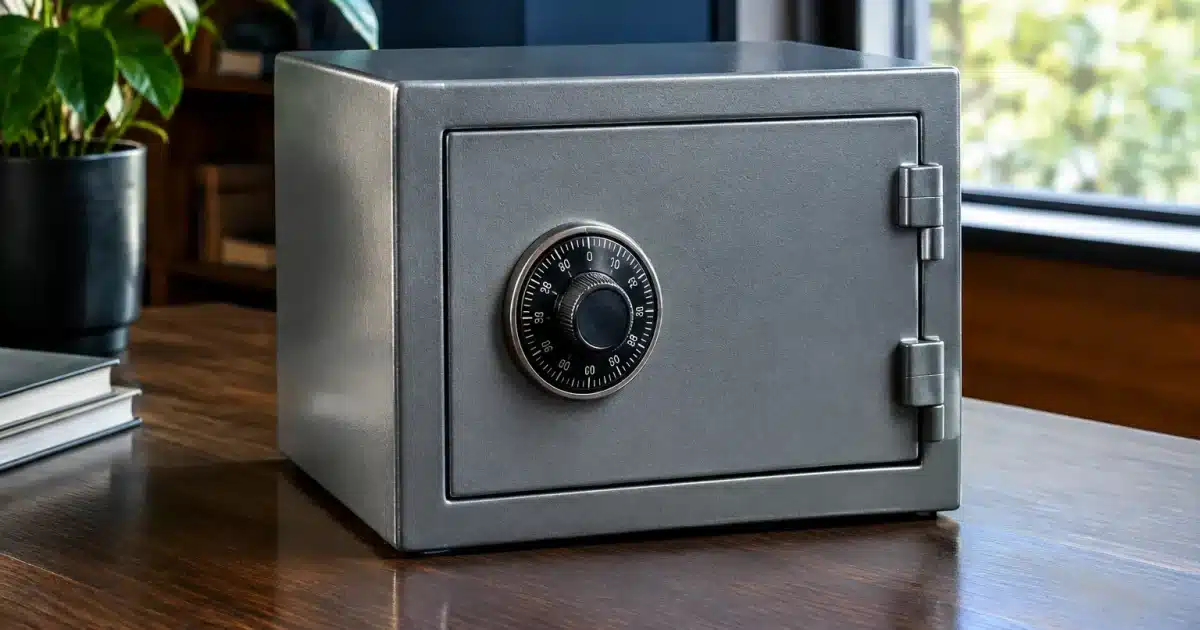
You have recently lost a loved one and you discover a safe in their home with no key and no known combination. Initial worry, questions cascading: can you force it open? Do you need a solicitor? Who pays for opening it? The good news is that this situation occurs far more often than you might think, and it follows a well-established legal path.
When a bank becomes aware of a death, it automatically restricts access to the deceased’s safe, whether located in the bank’s premises or in their home. This restriction protects the beneficiaries by preventing unauthorised persons from removing contents before the estate is properly inventoried. To resolve the situation, you must obtain legal confirmation of who the rightful heirs are. A solicitor acting for the estate, or in straightforward cases the personal representatives themselves, can verify the beneficiaries and request the bank or safe operator to release access. This verification proves who the legitimate heirs are and allows the bank or safe custodian to authorise access to the safe.
If keys or the combination disappeared with the deceased, this is not an insurmountable barrier. A specialist locksmith or safe technician can open the safe through forced entry. This operation almost always takes place in the presence of the solicitor handling the estate, sometimes a witness, and the beneficiaries or their representative. Nothing happens without the knowledge of the rightful parties: every item or document found is recorded in an official inventory.
What happens when a safe is restricted after a death?
The restriction is not a penalty—it is a precautionary measure. Until the estate is settled, no one can freely access the safe’s contents, even a surviving spouse. The bank requires proof of your status as a beneficiary before allowing anyone to approach it.
This mechanism prevents disputes between beneficiaries and stops valuable items (jewellery, securities, cash, documents) from disappearing before everyone has had a chance to know what is present. It is also a safeguard for HM Revenue & Customs, which must be able to verify the exact composition of the estate being transferred.
Steps to obtain access to the safe
A solicitor or the estate’s personal representatives play a central role in this process. They confirm to the bank that they have the legal authority to deal with the estate assets. Once the bank is satisfied with the identity and authority of the person requesting access, it can organise the opening of the safe in full compliance with law.
The procedure requires patience: you should generally expect several weeks between the death and the point at which access is actually authorised. This allows time for any will to be located and registered at the Probate Service if necessary, and for the personal representatives to establish their authority.
What to do if keys or the combination are missing
Hire a specialist locksmith or safe technician
When keys have gone missing or the combination was never shared with the beneficiaries, you must engage a professional locksmith or safe technician. This specialist has the equipment and expertise to open a safe without unnecessary damage, or to replace it if required. The work is arranged by appointment, coordinated with the solicitor or personal representatives to ensure the opening takes place within a legal framework.
Costs and timescale for forced opening
The cost of forced opening varies according to the make, age and robustness of the safe. For a domestic safe, expect generally between £150 and £600, though this can rise significantly for high-security safes held by banks. These costs are treated as estate administration expenses and are therefore met from the estate assets before any distribution to beneficiaries.
Key point to remember before any opening
Never attempt to force a safe open yourself, even if you believe you are the sole beneficiary. An opening without proper legal oversight can be challenged by other beneficiaries and could expose you to allegations of misappropriation of estate assets, even if unintentional.
The opening procedure: who must be present and how is the inventory conducted?
On the day of opening, several people are usually present: the solicitor or personal representative, the locksmith if forced entry is needed, and the beneficiaries or their representatives. A witness may be requested in cases of tension between parties or a complex estate, to ensure the procedure remains impartial.
Every item or document discovered is recorded in a detailed inventory, signed by those present. This document serves as the basis for the inheritance tax return (IHT400) and for later distribution among beneficiaries. Nothing may be removed from the safe before this inventory is complete, including cash or jewellery that might appear to have little value.
| Stage | Who is involved | Typical timescale |
|---|---|---|
| Safe access restricted | Bank or safe operator | Immediate |
| Authority confirmed | Solicitor or personal representatives | 2 to 6 weeks |
| Forced opening if required | Specialist locksmith | Few days after approval |
| Inventory of contents | Solicitor, beneficiaries, witness if needed | On the day of opening |
Legal risks: misappropriation of estate assets
Misappropriation of estate assets means deliberately concealing an asset from the estate to deprive other beneficiaries of their share. The law treats this very seriously: a beneficiary found guilty loses their entitlement to the concealed asset and can be required to pay substantially more than their original share. Even good intentions, such as removing a family heirloom before the official inventory, can be viewed as misappropriation if not authorised by the solicitor and other beneficiaries.
This is why the presence of all beneficiaries, or their legal representatives, is strongly recommended when the safe is opened. A simple misunderstanding about what the safe contains can escalate into lasting family conflict, whereas a transparent process prevents such friction.
FAQ: common questions about accessing a deceased’s safe
Can a safe be opened without a solicitor’s involvement? Only with written agreement from all beneficiaries, which is rarely advisable. Having a solicitor present remains the best protection against future disputes.
Who pays for the cost of forced opening? These costs are met from the estate assets, before any distribution to beneficiaries.
How long does it take to access a restricted safe? Generally between two and six weeks, depending on the complexity of the estate and how quickly authority can be confirmed.
What happens if the safe is empty? The absence of contents is also recorded in the inventory, which prevents any suspicion among beneficiaries later.